
Blessings Vertical Farm...
Vertical Farming grows crops in vertically stacked layers, often indoors, using Controlled Environment Agriculture (CEA) to optimize light, temperature, and nutrients, with soilless methods like hydroponics or aeroponics. This method drastically reduces land and water use while enabling year-round, local food production in urban areas, minimizing "food miles" and reliance on traditional farming's seasonal constraints and pesticide needs. While offering high yields and efficiency, it faces challenges like high initial energy costs for lighting and technology.
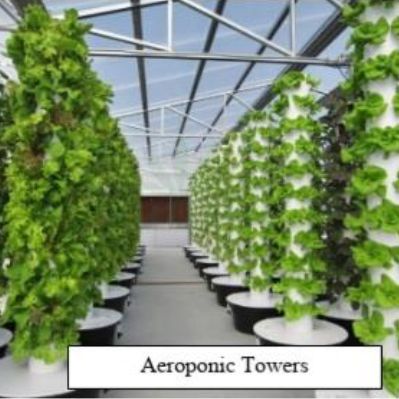
Aeroponic Towers
a vertical farming system that suspends plants, spraying their roots with a nutrient-rich mist instead of soil, maximizing space and water efficiency for growing herbs, vegetables, and flowers in small areas like urban homes or greenhouses, producing higher yields faster than traditional methods. These towers use a pump to deliver nutrients to the roots, allowing for controlled conditions and sustainable food production.
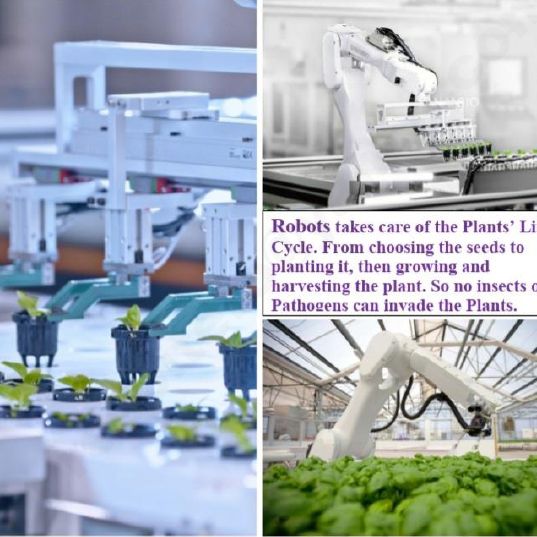
Production w/ Robotics
Integrates AI and automated systems for hyper-efficient, soil-free food production, using robots for tasks like seeding, watering, nutrient delivery, and harvesting, all managed by sensors and data to optimize light, climate, and resources, allowing farms to operate in dense urban settings and even supply stores directly, drastically reducing labor and environmental impact.
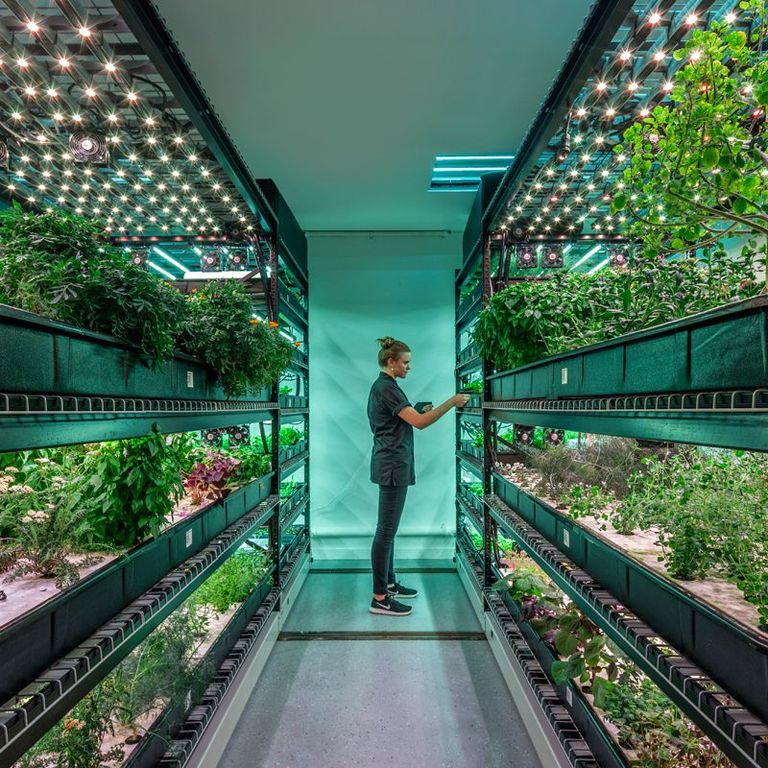
Clinical Rearing
Generally refers to the use of highly controlled vertical farm environments for the cultivation of plants used in pharmaceutical or clinical applications. This application leverages the precision and isolation of vertical farming to produce high-value, consistent, and contaminant-free medicinal compounds or crops for specific research purposes.
Other Integration...
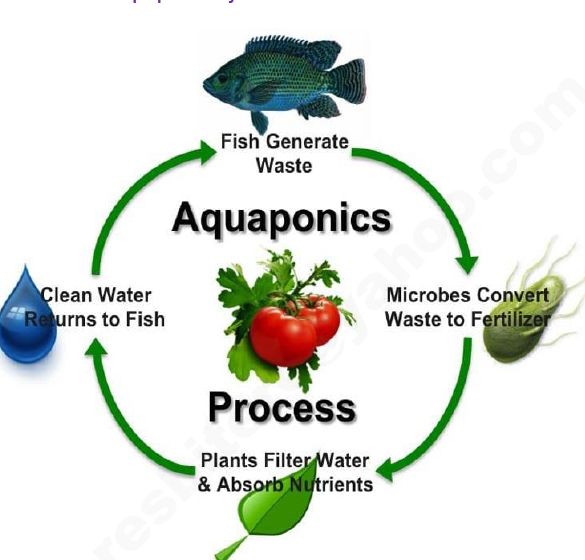
Aquaponics Symbiosis
a natural, closed-loop relationship where fish waste provides nutrients for plants, and plants filter the water, creating a self-sustaining ecosystem for both, mimicking nature's cycle to produce food sustainably with less water and fertilizer compared to traditional farming. Beneficial bacteria are crucial, converting toxic fish ammonia into nitrates that plants absorb, while the plants purify the water, which then returns clean for the fish, offering a productive method for growing fish and crops.
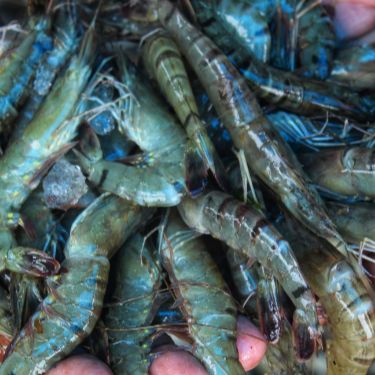
Shrimp/Prawn Culture
Macrobrachium rosenbergii, also known as the giant river prawn or giant freshwater prawn, is a commercially important species of palaemonid freshwater prawn. It is found throughout the tropical and subtropical areas of the Indo-Pacific region, from India to Southeast Asia and Northern Australia.
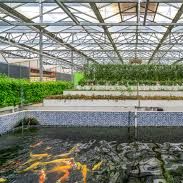
Fish Culture
Freshwater fish culture is the farming of fish and other aquatic organisms in freshwater environments like ponds, lakes, and rivers, using systems from extensive ponds to intensive recirculating tanks, to produce food, for sport, or conservation. It's a historical practice, now a major industry, involving controlled breeding, feeding, and harvesting of species like carp, tilapia, and catfish, contributing significantly to food security and income, especially in developing regions.
Elias & Company offers industrial location for food production companies that specializes on processing of locally produced farmed products such as grains, fruits and vegetables, fish and poultries, and more.